Pointe du Hoc
Pointe du Hoc is a limestone promontory rising 100 feet from the Channel between Utah and Omaha beaches. On the morning of June 6, 1944, the U.S. 2nd Ranger Battalion climbed its cliffs under fire to destroy the German gun battery on top, and the site remains as the bombardment left it: cratered, broken, and preserved. Entry is free, the site is part of the D-Day landing beaches inscribed on the UNESCO World Heritage List on July 26, 2026, and an 18-month restoration runs through mid-2027.
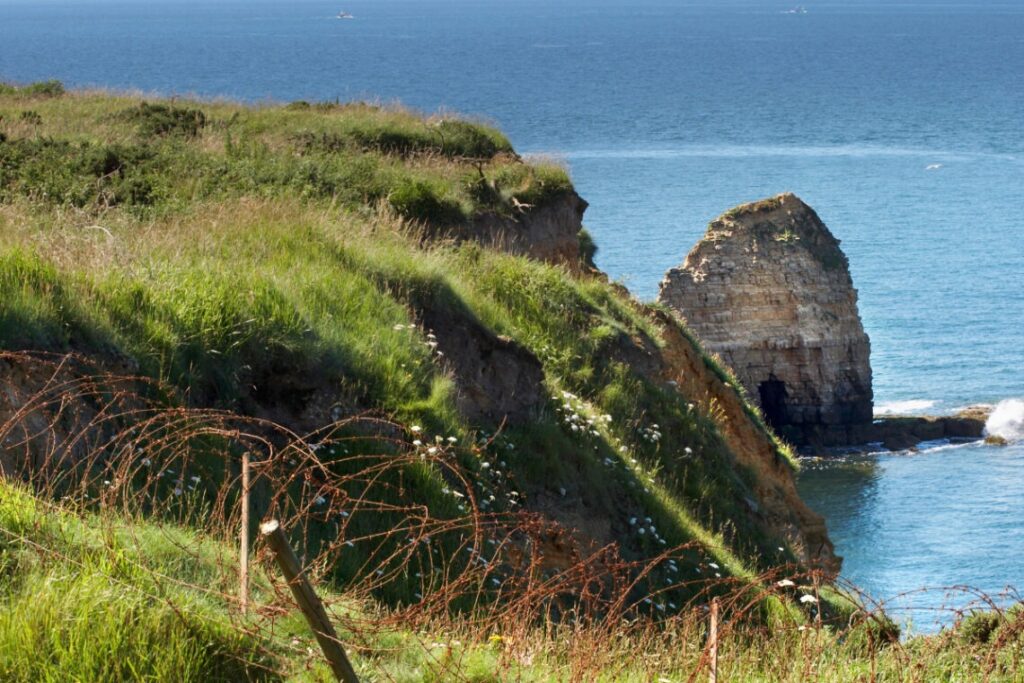
What Happened Here
The Germans placed six 155mm coastal guns on Pointe du Hoc, positioned to shell both American landing beaches from a single point, and Allied planners marked the battery for destruction at H-Hour. At 7:10 a.m. on June 6, about 225 Rangers under Lieutenant Colonel James Rudder landed at the base of the cliffs, fired rocket-launched grappling hooks, and climbed rope ladders while the German garrison shot down at them and cut the ropes.
The Rangers took the top in about half an hour and found the casemates empty; the guns had been moved inland before the invasion. A patrol found five of them in an orchard lane that morning and destroyed them with thermite grenades. The battalion then held the point against counterattacks for two days, cut off, until relief arrived from Omaha on June 8. Of the roughly 225 men who landed, about 90 could still fight when it ended.
Visiting Pointe du Hoc Today
The American Battle Monuments Commission maintains the site, and entry is free, with a parking lot and visitor center at the entrance. The ground stays as the naval shelling left it: craters big enough to stand in, cracked casemates open to walk through, and the fire-control bunker at the cliff edge carrying the granite Ranger Monument. The walk from the visitor center to the cliff takes about ten minutes, and the site drew around 640,000 visitors in 2025.
Know the current status before you go. The ABMC began an 18-month, $10 million restoration in February 2026, running to mid-2027, to stabilize the cliff edge and the bunkers. The site stays open through the work, some paths are rerouted, and the top platform of the observation bunker is closed; the bunker interior remains open. Cliff erosion is real here, so respect the barriers at the edge.
Getting There
Pointe du Hoc sits about 30 minutes from Bayeux, 15 minutes west of Omaha Beach and 45 minutes from Utah Beach. The LinkParis.com D-Day and Mont St. Michel overnight covers the site on its D-Day afternoon, with a night in Bayeux and Mont Saint-Michel the next day. Our guide to the ten best D-Day museums in Normandy covers the museums nearby.
Frequently Asked Questions
Is Pointe du Hoc free to visit?
Yes. The site, the visitor center, and parking are free, maintained by the American Battle Monuments Commission, and open daily.
Is Pointe du Hoc open during the restoration?
Yes. The site stays open through the 18-month ABMC restoration running from February 2026 to mid-2027. Some paths are rerouted and the top platform of the observation bunker is closed, but the cliff edge, the craters, and the bunker interior remain accessible.
Were the guns really gone when the Rangers reached the top?
Yes. The Germans had moved the 155mm guns inland before the invasion, leaving the casemates empty. A Ranger patrol found five of the guns in an orchard lane on the morning of June 6 and destroyed them with thermite grenades.
How many Rangers survived Pointe du Hoc?
Of the roughly 225 men of the 2nd Ranger Battalion who landed at 7:10 a.m. on June 6, about 90 were still able to fight when relief arrived on June 8.
How long do you need at Pointe du Hoc?
About an hour covers the walk to the cliff, the craters and casemates, the Ranger Monument, and the visitor center. Photographers and military historians run longer.