Utah Beach: A Comprehensive Historical Guide
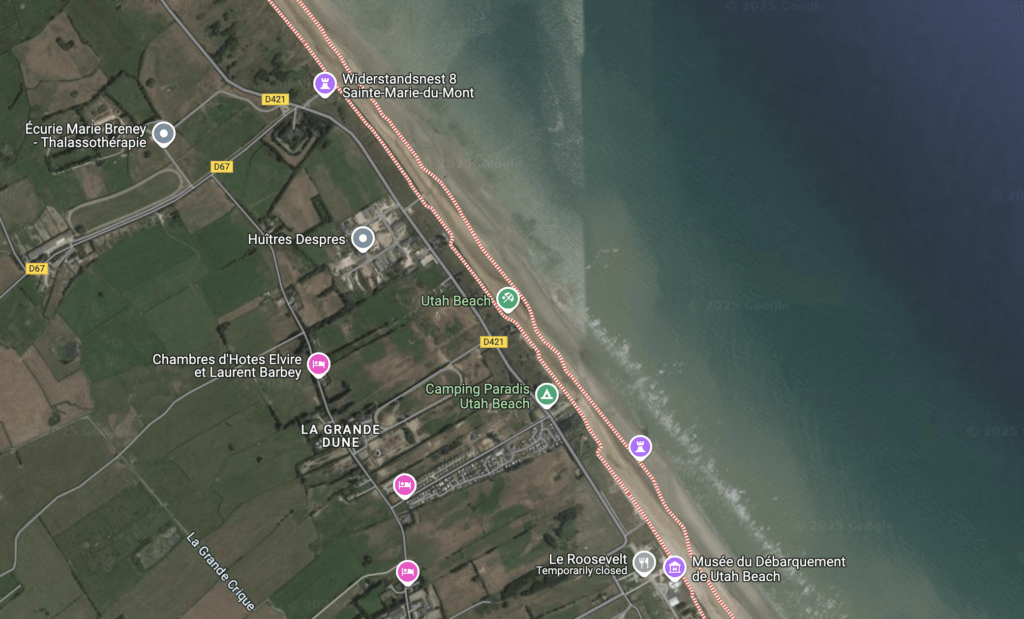
Utah Beach was the westernmost of the five D-Day landing beaches, on the east coast of the Cotentin Peninsula about an hour northwest of Bayeux. American forces landed here on June 6, 1944, took the lightest casualties of any beach, and opened the drive toward the port of Cherbourg. The beach is free, open year-round, and part of the D-Day landing beaches inscribed on the UNESCO World Heritage List on July 26, 2026.
What Happened Here
The land behind Utah is low and marshy, and the Germans had flooded it, leaving a few raised causeways as the only routes inland. During the night before the landing, the U.S. 82nd and 101st Airborne Divisions dropped behind the beach to seize those causeway exits and the crossroads villages. The seaborne assault fell to the U.S. 4th Infantry Division.
Current and smoke pushed the first wave about two kilometers south of the planned sector, onto more lightly defended sand near La Madeleine. Brigadier General Theodore Roosevelt Jr., the only general to land with the first wave on D-Day, made the call to fight from the actual landing spot rather than shift the assault, and the follow-up waves came in behind him. He received the Medal of Honor for his actions that morning. The beach cost about 197 American casualties on June 6 — the lowest toll of the five beaches — and the troops linked up with the paratroopers inland the same day.
Visiting the Beach Today
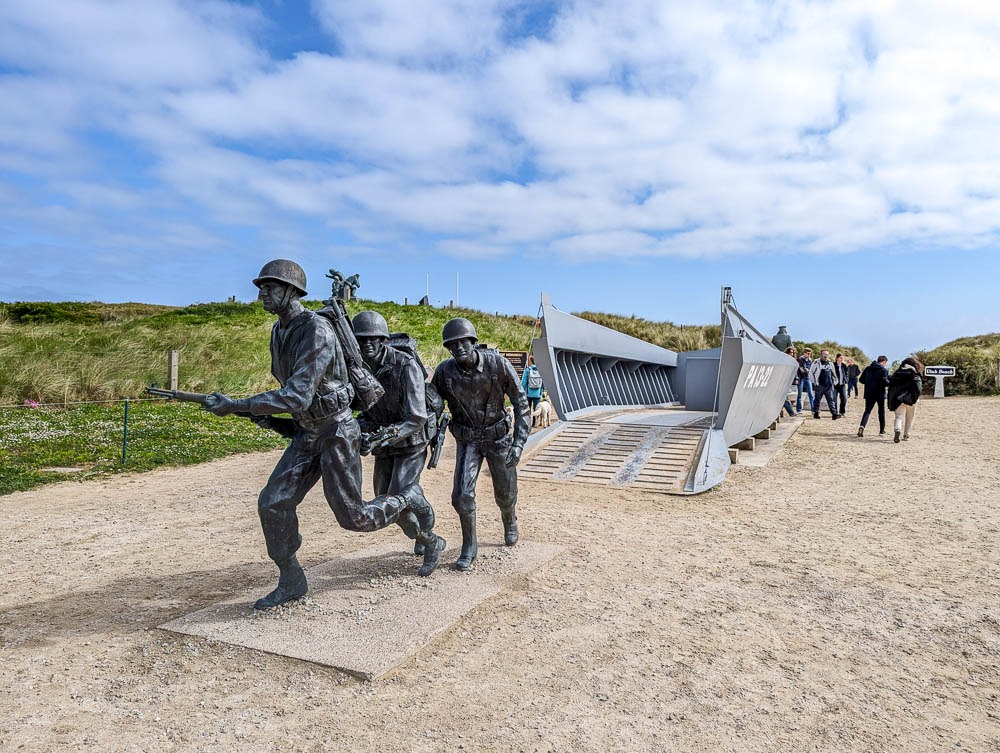
Utah is an open public beach backed by dunes, free at all hours. Bunkers, beach obstacles, and monuments stand where they stood, including the U.S. Federal Monument and memorials to the 4th Infantry Division and the units that landed here. The wind is constant and the beach is long; dress for it.
The Museum and the Sites Nearby
The Utah Beach D-Day Museum stands on the dunes at La Madeleine, built around a former German strongpoint at the landing site itself. Its collection includes an original B-26 Marauder bomber, landing craft, vehicles, and the full story of the sector. The museum has a bookshop and a café on site.
Sainte-Mère-Église sits about fifteen minutes inland. Paratroopers landed in and around the town in the first hours of June 6, and the Airborne Museum stands on the church square where trooper John Steele hung from the steeple by his parachute. Carentan, the D-Day Experience museum, and the Azeville battery lie within a short drive. Our guide to the ten best D-Day museums in Normandy covers the standouts.
Getting There
Utah Beach is about an hour by car from Bayeux and about 45 minutes from Omaha Beach. No train serves the beach. The LinkParis.com D-Day tour from Bayeux reaches Utah Beach in the morning, after Sainte-Mère-Église and before Omaha, Pointe du Hoc, and the American Cemetery.
Frequently Asked Questions
Where is Utah Beach?
Utah Beach is on the east coast of the Cotentin Peninsula in the Manche department of Normandy, near Sainte-Marie-du-Mont. It sits about an hour by car from Bayeux and 45 minutes from Omaha Beach.
Why were casualties so low at Utah Beach?
The first wave landed about two kilometers south of the planned sector, on more lightly defended sand, and the airborne drops inland had already disrupted the German response. The landing cost about 197 American casualties, against roughly 2,400 at Omaha.
Is the Utah Beach museum worth visiting?
Yes. The Utah Beach D-Day Museum stands on the landing site itself, built around a former German strongpoint, and holds an original B-26 Marauder bomber among its collection. Check hours and tickets at utah-beach.com.
Can you visit Utah Beach and Omaha Beach in one day?
Yes. The two beaches sit about 45 minutes apart by car, and most full-day D-Day itineraries cover both along with Pointe du Hoc, Sainte-Mère-Église, and the American Cemetery.
Who was Theodore Roosevelt Jr. at Utah Beach?
Brigadier General Theodore Roosevelt Jr., son of President Theodore Roosevelt, landed with the first wave at Utah Beach at age 56 and redirected the assault from the actual landing point. He received the Medal of Honor and died of a heart attack in Normandy five weeks later.